
Recent News
When wildfire smoke moves in, your home can help
Certain home upgrades make a difference, not only during wildfire season, but anytime outdoor air quality is unhealthy.

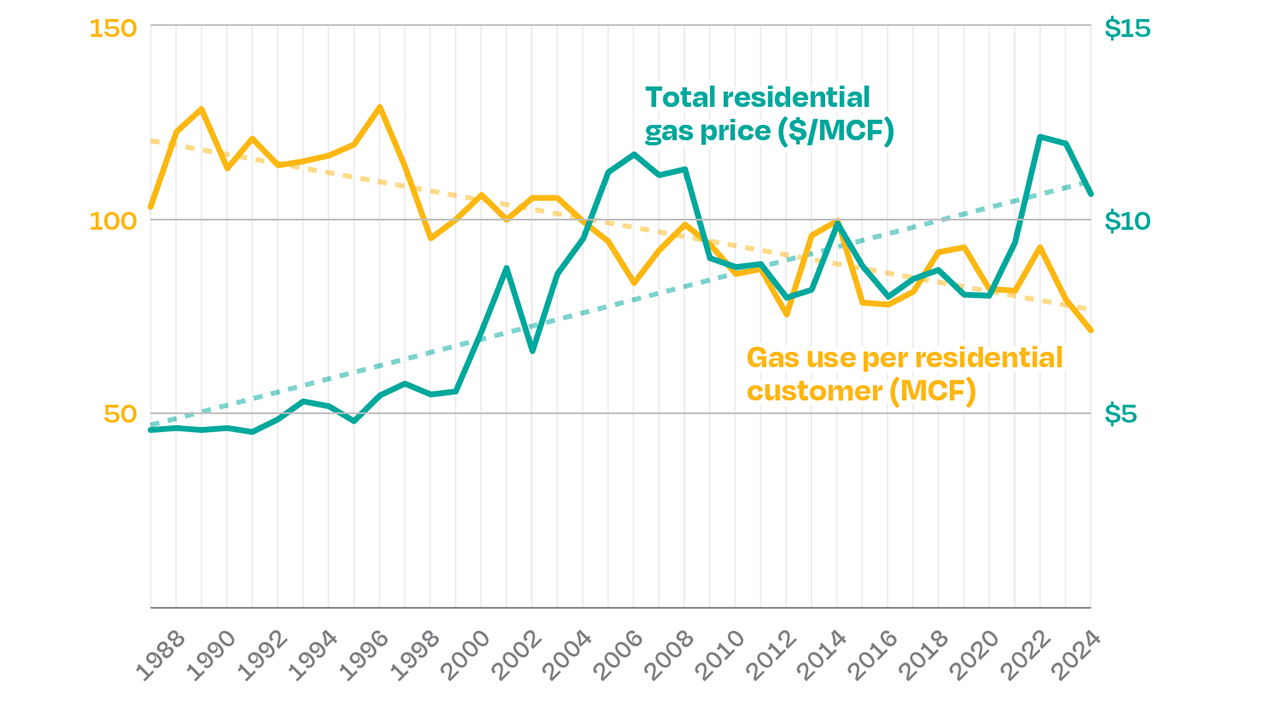
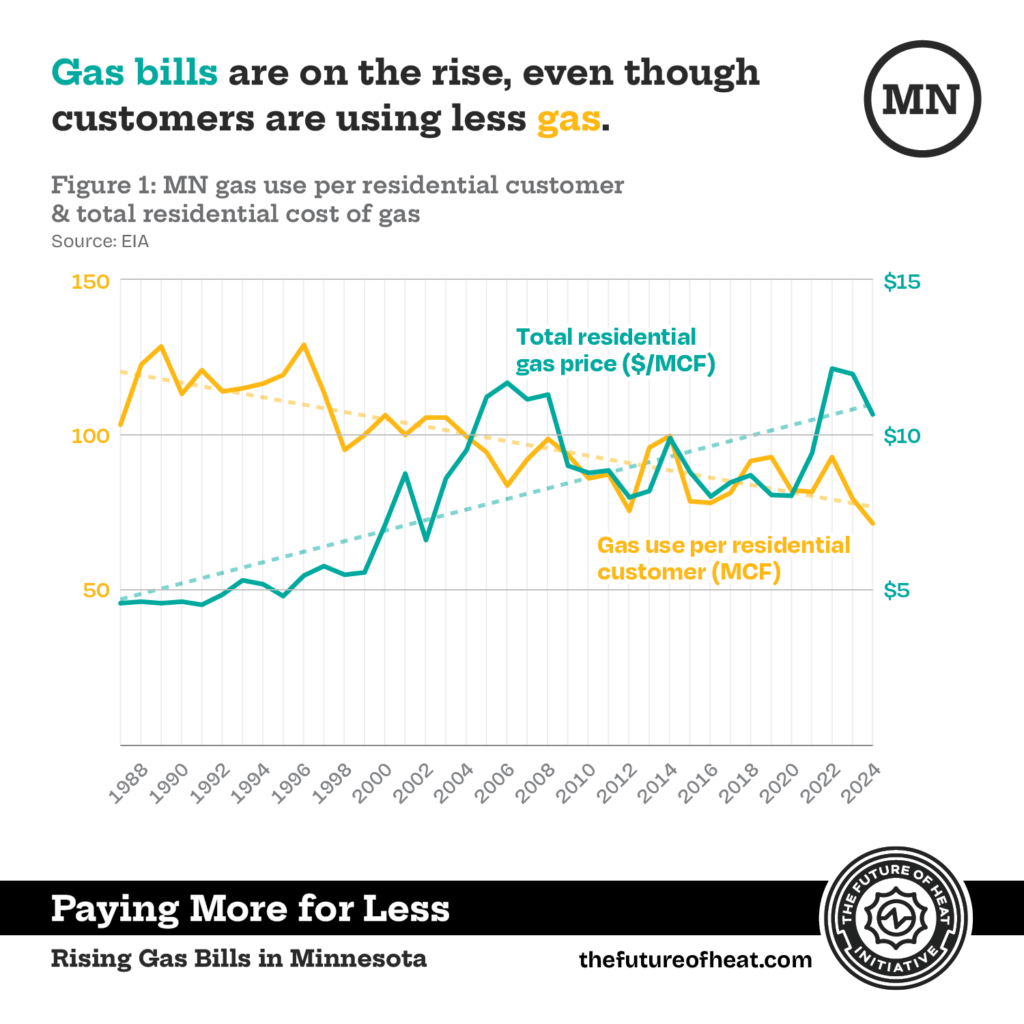 The cost of gas is notoriously volatile and prone to price spikes as a result of global energy markets, foreign conflicts and even cold snaps. Yet even without such price fluctuations, energy bills are becoming harder to manage for families across Minnesota. Even as many households take steps to cut back, like turning down thermostats, monthly gas bills keep climbing. It’s a frustrating reality: doing more to save, but paying more anyway.
Why? The short answer: it’s not about how much gas you use, it’s about how much utilities are spending on the system that delivers it.
According to a new analysis from the Future of Heat Initiative (FOHI), the typical Minnesota household has reduced gas use by 23% over the past five years. But during that same period, the average gas bill has increased by 32%.
What this shows: The biggest driver behind rising bills isn’t the price of gas itself. It’s the cost of maintaining and expanding the gas line system. Minnesota’s three largest gas utilities, CenterPoint Energy, Xcel Energy, and Minnesota Energy Resources Corporation (MERC), have been investing billions of dollars to replace and expand gas lines.
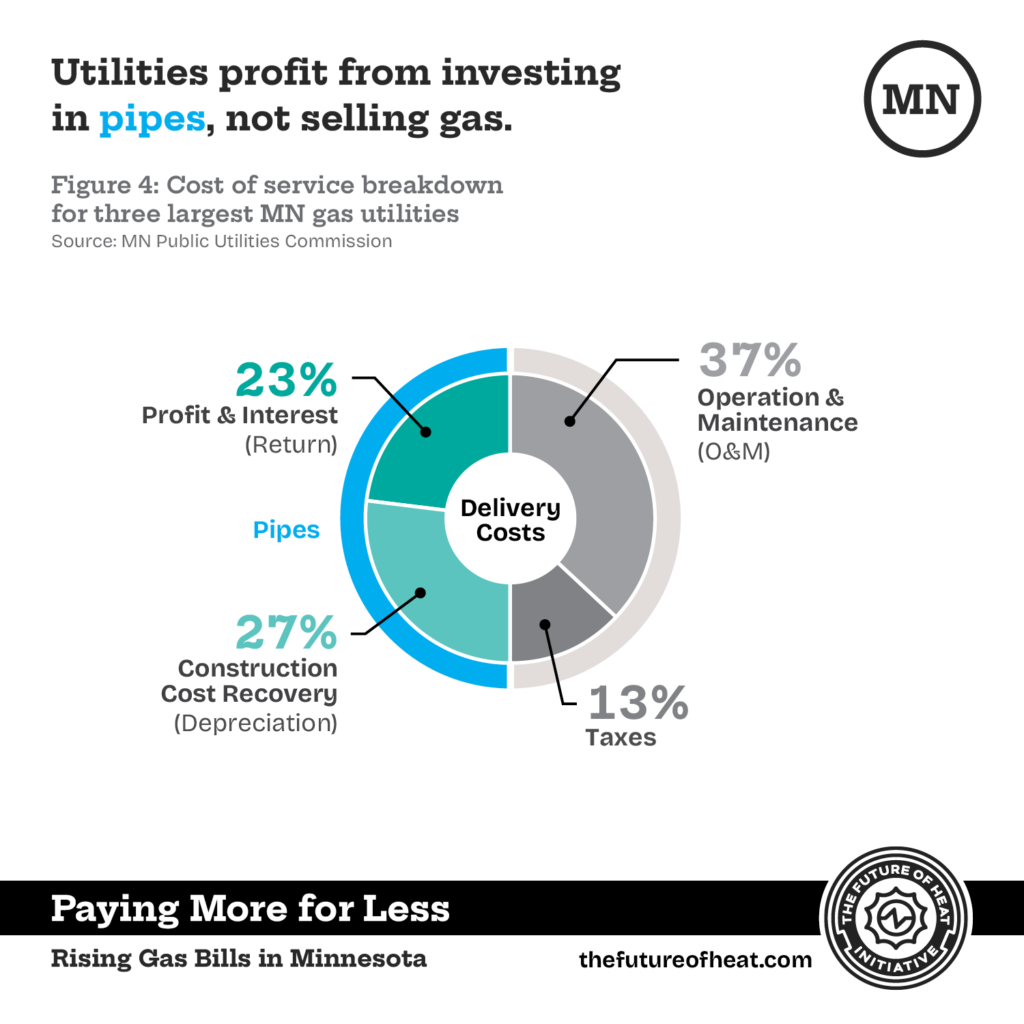
What many people don’t realize is that utilities generally don’t make money from the gas they sell. Their profits come from infrastructure investments, such as replacing gas lines. The more they spend on these projects, the more they can charge customers through a “delivery charge” on your utility bill — putting customers on the hook not just for the cost of pipelines, but also for corporate profits through an unnecessarily high rate of return on the pipeline investment. In fact, 23% of the entire delivery charge goes straight to corporate profits with interest. That creates a system in which utilities are incentivized to overspend on pipelines for higher profits, which leads to higher bills, regardless of whether customers use more or less gas.

Over the past decade, this dynamic has driven a surge in utility spending. The combined value of gas system assets for the three largest utilities in Minnesota has grown from $2.4 billion to $5.6 billion, an annual growth rate of nearly 9%. This rapid expansion is happening even as overall gas use declines, creating a mismatch between what families need and what they are being asked to pay for.
At the same time, the structure of gas bills has fundamentally changed. Today, about 60% of the average gas bill goes toward delivery charges, while only around 40% pays for the actual gas. Forty years ago, it was the opposite. Now, the majority of costs are fixed and tied to pipeline spending, making it much harder for households to control their bills by using less gas.

For Minnesota families, this shift has real consequences. Higher fixed costs mean fewer options for managing monthly expenses, especially during the winter when heating is essential. Working families and those on fixed incomes are hit the hardest, as they have the least flexibility to absorb rising costs. These pressures ripple through communities, affecting housing stability, increasing demand for Energy Assistance, and putting additional strain on local economies.
Clean Heat Minnesota is working to make sure our energy system puts people first, prioritizing affordability, safety, and long-term sustainability over costly investments that leave families paying more for less. As more households work to reduce energy use through weatherization and modernizing to state-of-the-art, highly efficient electric technologies like heat pumps that can run on cheap, clean energy, it’s time for our policies to catch up.
Join us in calling for smarter investments, stronger consumer protections, and a path forward to achieve lasting energy affordability that works for all Minnesotans. This starts with the Minnesota Public Utilities Commission ending utility handouts like line extension allowances and reining in runaway pipeline spending designed more for utility profits than serving the best interests of customers. That includes Xcel’s most recent request for yet another gas rate hike that would add 8.7% to customer bills.
The status quo is expensive. As the Minnesota PUC considers the Future of Gas and other related dockets, join us in working toward an affordable energy future with highly efficient homes that can run on the cheapest energy on the planet – clean energy like wind and solar. Together, we can build an energy system that lowers costs, reduces risk, and truly serves our communities.
Certain home upgrades make a difference, not only during wildfire season, but anytime outdoor air quality is unhealthy.
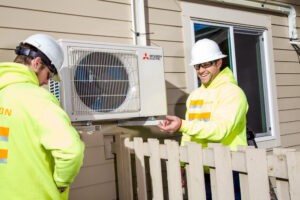
A heat pump is a type of heating and cooling system that is installed outside a home, multifamily residence, or business.
As families across Minnesota struggle with gas bills, utility costs continue to rise.