Our coalition members contributed to building a strong case against Line Extension Allowances at the PUC. Comments included highlighting health impacts of gas, detailed accounting of costs for consumers, climate impacts, and national trends. Read the press release here.
Coalition members also signed on to a letter from over 30 different organizations, local governments, and governmental agencies to bolster our argument: End Line Extension Allowances so ratepayers aren’t subsidizing the expansion of the gas system and increasing corporate profits.
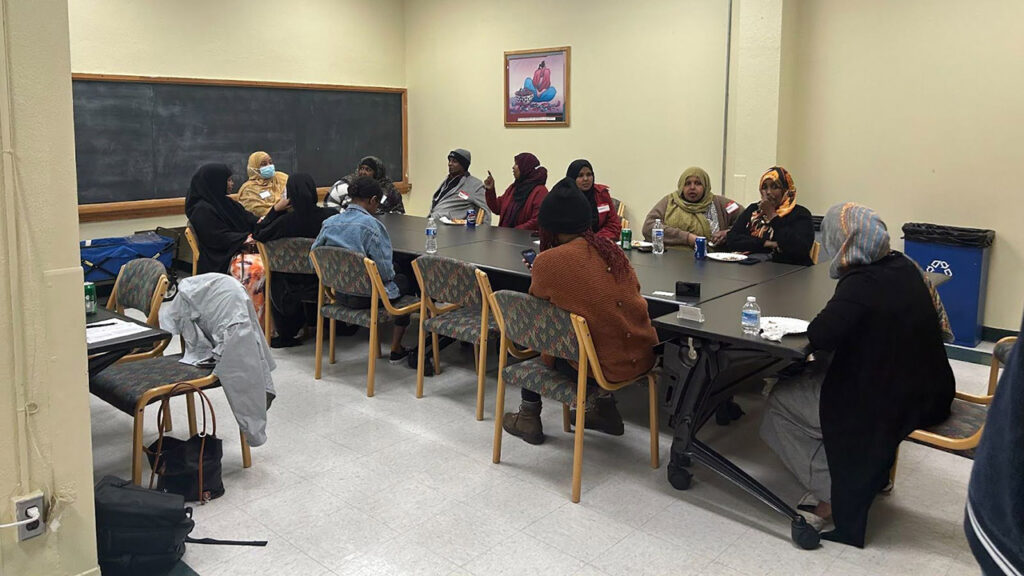
On top of our regulatory action, we met with community members and, through workshops and presentations, successfully organized over 30 public comments from everyday Minnesotans concerned about Minnesota’s ever-expanding natural gas system.
In 2026, we anticipate the PUC will make its final decision on Line Extension Allowances. We’re proud of the work we did as a coalition this year, and look forward to expanding on it in the years to come.
Participation in the Thermal Energy Network Deployment Workgroup
More than 10 Clean Heat Minnesota coalition member groups participated in the PUC’s Thermal Energy Network Deployment Workgroup in 2025. The group consisted of 80 stakeholders from more than 50 organizations, convened by the PUC at the direction of the Minnesota Legislature to examine potential regulatory opportunities and barriers for regulated natural gas utilities to deploy thermal energy networks. Thermal energy networks provide space heating, cooling, and water heating to multiple buildings through a shared thermal loop. Coalition members presented and provided valuable feedback throughout the yearlong workgroup, contributing to the development of the final report and recommendations published by the PUC. Read the report here.
Gas Integrated Resource Planning
In 2025, the PUC established new gas “Integrated Resource Plan” (or IRP) frameworks for Minnesota’s three largest investor-owned gas utilities. Those utilities will now be required to file regular, forward-looking plans that analyze the best mix of resources to meet customer demand. In their analysis, utilities must consider the state’s greenhouse gas emissions goals and local government climate action plans. In July 2026, Xcel Energy will file Minnesota’s first-ever gas IRP, followed by CenterPoint in 2027, and MERC in 2028. The Commission aims to issue decisions within 18 months of each filing. Clean Heat Minnesota coalition members were actively involved in PUC filings to set these initial requirements, and are participating in stakeholder workshops hosted by utilities as they develop their plans. These early conversations are crucial — they’re where questions get asked, concerns get raised, and better ideas emerge. Clean Heat Minnesota coalition partners will continue to be at the table for all of these discussions, advocating for plans that truly serve Minnesotans, advance climate progress, and center equity. Learn more about gas IRPs more broadly here.
Deepening Relationships
Clean Heat Minnesota believes that the power to transition Minnesota from gas to clean heat must be rooted in our communities—which is why deep partnerships among coalition members is crucial to our success. We host full coalition meetings monthly, as well as monthly Policy and Technical Working Group and Grassroots Working Group meetings. We also convened our first in-person, full coalition retreat in the summer of 2025.
The summer retreat brought together coalition members from across the Twin Cities metro area, rural Minnesota, and national partners with the goal of building relationships and planning what’s next. In breakout groups, we discussed our shared work and deepened cross-collaboration across regions, sectors, and industries. We know relationships with one another are the bedrock to strong campaigning, and we look forward to more opportunities like this in 2026.
One of the most exciting things about Clean Heat Minnesota is the coalition members who are rolling up their sleeves and doing the work. Here are a few key highlights from coalition members in 2025:
AICHO and MNIPL
The American Indian Community Housing Organization (AICHO) hosted Clean Heat Workshops and community engagement sessions with monthly meetings in Duluth, Minnesota. These meetings built relationships and community awareness around clean energy, educated the public on important clean energy topics, and strengthened networks. Minnesota Interfaith Power and Light provided insight into local climate advocacy opportunities.