Cooking is an important part of our everyday lives. It brings family and friends together, shares traditions, and connects us with our communities. What many Minnesotans may not realize is that cooking with gas can also release harmful pollutants into our homes, affecting the air we breathe. Fortunately, a cleaner, healthier, and more energy-efficient way to cook exists. Induction stoves use electricity to heat pots and pans directly, rather than burning gas. They heat up quickly, offer precise temperature control, and don’t produce the harmful indoor combustion pollution associated with gas stoves.
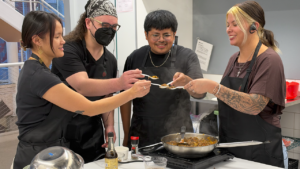
This October 2026, Clean Heat Minnesota coalition members COPAL, Ayada Leads, Minnesota Interfaith Power & Light, Sierra Club, Third Act Minnesota, St. Paul Federation of Educators, Fresh Energy, and Native Sun came together to host three induction cooking classes at the North End Community Center in St. Paul. Led by local chef Oswaldo Alvarado, the classes brought together community members, climate advocates, elders, and youth to learn about induction cooking, prepare a delicious meal, and connect with people from different backgrounds and generations.
Bringing the benefits of induction cooking to life
For many Minnesotans, switching away from gas stoves can feel like a big change. Some even worry that electric stoves won’t cook as well as gas, while others assume induction technology is expensive or difficult to use. The cooking classes debunked many of these myths and gave attendees an opportunity to put the technology to the test.
Working in small groups with portable induction cooktops, attendees prepared pabellón criollo, a traditional Venezuelan dish featuring shredded beef, white rice, fried sweet plantains, and black beans. Throughout the two-hour classes, Chef Alvarado showed how induction cooking can make meal prep easier and more efficient. The attendees saw how quickly the burners heated water and oil for rice and plantains, and how easily they could adjust the temperature to sauté vegetables and simmer beef and beans.
For Chef Alvarado, induction offers many of the same benefits as gas stove cooking without the open flame or excess heat. “Induction gives us that same ability to control the heat, but it also heats very quickly without an open flame putting so much heat into the kitchen,” said Alvarado. “It’s a cleaner way to cook than gas because there’s no combustion in the kitchen, and it’s more energy-efficient than a traditional electric resistance stove.”
Attendees also learned about induction’s safety features, the types of cookware that work with induction burners, and the differences between gas, traditional electric, and induction cooking. Many were surprised by how easy the portable cooktops were to use and how affordable they could be, and some were even interested in purchasing their own after the classes. One attendee shared how the experience changed their perspective on making the switch away from gas: “I had never thought of using a plug-in [portable induction cooktop] as a stepping stone to a full induction stove. I’m definitely pursuing this as we transition away from our gas stove!”
Building healthier homes and stronger communities
Beyond learning a new recipe, the classes helped attendees better understand how the appliances we use every day can affect our health, energy bills, and environment. Gas stoves release pollutants like nitrogen dioxide into our homes, which can worsen respiratory conditions and pose particular risks for children and older adults. Because induction stoves don’t burn gas, they eliminate this source of indoor air pollution while using energy more efficiently.
For some, learning about the health impacts of gas cooking was eye-opening. Others were surprised to learn that portable induction burners could offer an affordable way to try cleaner cooking without replacing their entire stove. The classes created an opportunity for community members from different cultures and generations to connect over a shared meal. Attendees worked together to prepare food, exchanged stories, and discussed how clean energy technologies could benefit their own households.
Making these conversations accessible and welcoming was central to the experience. Ethan Culver, Senior Associate of Coalitions and Campaigns at Fresh Energy, and Monse Perez Barrios, Environmental Justice Community Outreach Specialist at COPAL, shared that the free classes included language interpretation and hands-on instruction, helping attendees learn about a technology that many had never used before.
Events like these are especially important for communities that have historically had less access to information and resources about clean energy upgrades. Giving people the opportunity to try new technologies themselves can help address misconceptions and build confidence in making decisions about their homes. “Sometimes hearing something from a community member or someone you trust makes a much bigger difference than hearing it from an organization or an agency,” said Barrios.
Cooking up a cleaner future for Minnesota
The cooking classes showed that upgrading to cleaner energy doesn’t have to be complicated. Sometimes, it can start with something as simple as trying a portable induction burner and preparing a favorite meal. As more Minnesotans learn about the benefits of induction cooking, opportunities like these can help families make informed decisions about their homes and take steps toward healthier indoor air, lower energy use, and less reliance on fossil fuels.
But making clean energy accessible means more than introducing new technology. It also means ensuring communities have the information, resources, and support they need to benefit from the transition. Through hands-on experiences and partnerships with community organizations, Clean Heat Minnesota is working to make that future a reality for all Minnesotans, regardless of income, race, or ZIP code. As Chef Alvarado reminded attendees, upgrading to induction doesn’t mean giving up the foods and traditions we love. “You don’t have to change the dishes you love to cook.”
About the Author
Natalie Cook
Natalie Cook is Clean Heat Minnesota’s Coalition Manager. Natalie comes to the coalition with a decade of experience in coalition management and organizing from Sierra Club. Most recently at Sierra Club, Natalie was a Senior Field Strategist with the Beyond Dirty Fuels Campaign, and some will know her from her time at the Sierra Club North Star Chapter where she was a Lead Organizer. After a few years of regional and federal focused campaigning, she is looking forward to working in Minnesota again.
Beyond learning a new recipe, the classes helped attendees better understand how the appliances we use every day can affect our health, energy bills, and environment.
Everyday activities like cooking with a gas stove, burning candles or incense, and using certain household products can release pollution into the air.
We use cookies on our site to enhance your experience. By continuing to browse our site, you are agreeing to our use of cookies and our privacy policy.


 Cooking is an important part of our everyday lives. It brings family and friends together, shares traditions, and connects us with our communities. What many Minnesotans may not realize is that cooking with gas can also release harmful pollutants into our homes, affecting the air we breathe. Fortunately, a cleaner, healthier, and more energy-efficient way to cook exists. Induction stoves use electricity to heat pots and pans directly, rather than burning gas. They heat up quickly, offer precise temperature control, and don’t produce the harmful indoor combustion pollution associated with gas stoves.

 Working in small groups with portable induction cooktops, attendees prepared pabellón criollo, a traditional Venezuelan dish featuring shredded beef, white rice, fried sweet plantains, and black beans. Throughout the two-hour classes, Chef Alvarado showed how induction cooking can make meal prep easier and more efficient. The attendees saw how quickly the burners heated water and oil for rice and plantains, and how easily they could adjust the temperature to sauté vegetables and simmer beef and beans.
 For some, learning about the