As families across Minnesota struggle with gas bills, utility costs continue to rise. Across 2024 and 2025, nearly 60,000 households were disconnected from gas service for unpaid bills. As of March 2026, more than $156 million in gas and electric bills remained unpaid statewide. But while households fall behind, gas utilities are bringing record profits through building and replacing gas pipes.
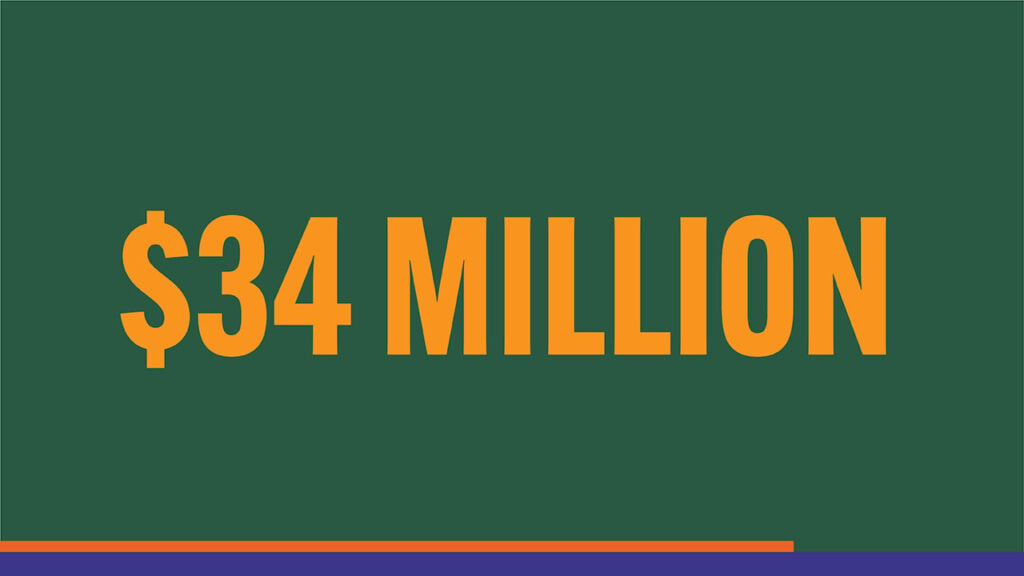
One way utilities generate those profits is through line extension allowances (LEAs) — a $34 million policy that quietly allows gas utilities to charge existing customers for the cost of adding pipes to serve new customers. It’s a little-known practice, but one that plays a role in driving up hidden costs on gas bills when families can least afford it.
When utilities build gas lines for new developments, the costs don’t stay with those projects. Instead, they’re spread across all customers through monthly delivery charges. This setup shifts the burden of expansion onto existing households. Minnesotans are effectively subsidizing the cost of expanding the gas system, making it easier and more profitable for utilities to grow their customer base.
And these costs don’t show up as a clear charge on a bill. Instead, they are built into delivery charges: the fixed fees customers pay every month, regardless of how much gas they use. That means that households that are already struggling and trying to cut back on their gas usage can’t control how much they’re paying to cover the cost of expanding the gas system. From 2019-2024, customers were paying more for gas pipe infrastructure than for the gas itself, with costs split roughly 60/40. In other words, Minnesotans are paying for pipes they don’t use, to support new customers, guaranteeing profits for utility shareholders for decades to come.
Minnesota has set targets to cut greenhouse gas emissions 50% by 2030 and reach net-zero by 2050. But line extension allowances are pushing in the opposite direction. Every new pipe or connection built today is designed to last for decades, locking in future costs and emissions. Instead of lowering bills and investing in cleaner, more affordable energy, Minnesotans are being charged to expand a gas system that is expected to decline in use.
The Minnesota Public Utilities Commission (PUC) can act now to slow gas system expansion, reduce excessive utility profits, and address energy affordability concerns by eliminating LEAs. Removing LEAs could save CenterPoint, Minnesota Energy Resources, and Xcel Energy customers an estimated $34 million every year.
Minnesota wouldn’t be the first to address LEAs across the country; states are reevaluating how gas systems are planned and paid for as part of broader Future of Gas (FOG) proceedings. California, Colorado, and New York have already eliminated LEAs statewide. Additionally, polling across FOG states show 72% of voters against the practice.
Ending LEAs is an important first step, but it cannot be the last. The PUC’s ongoing FOG proceeding provides an opportunity to rethink how the gas system is designed and ensure it works for customers, not just for utility profits. Ending LEAs would be a big step toward a better energy future–one that both addresses energy affordability today, and sets us up for a safe, affordable clean energy future.